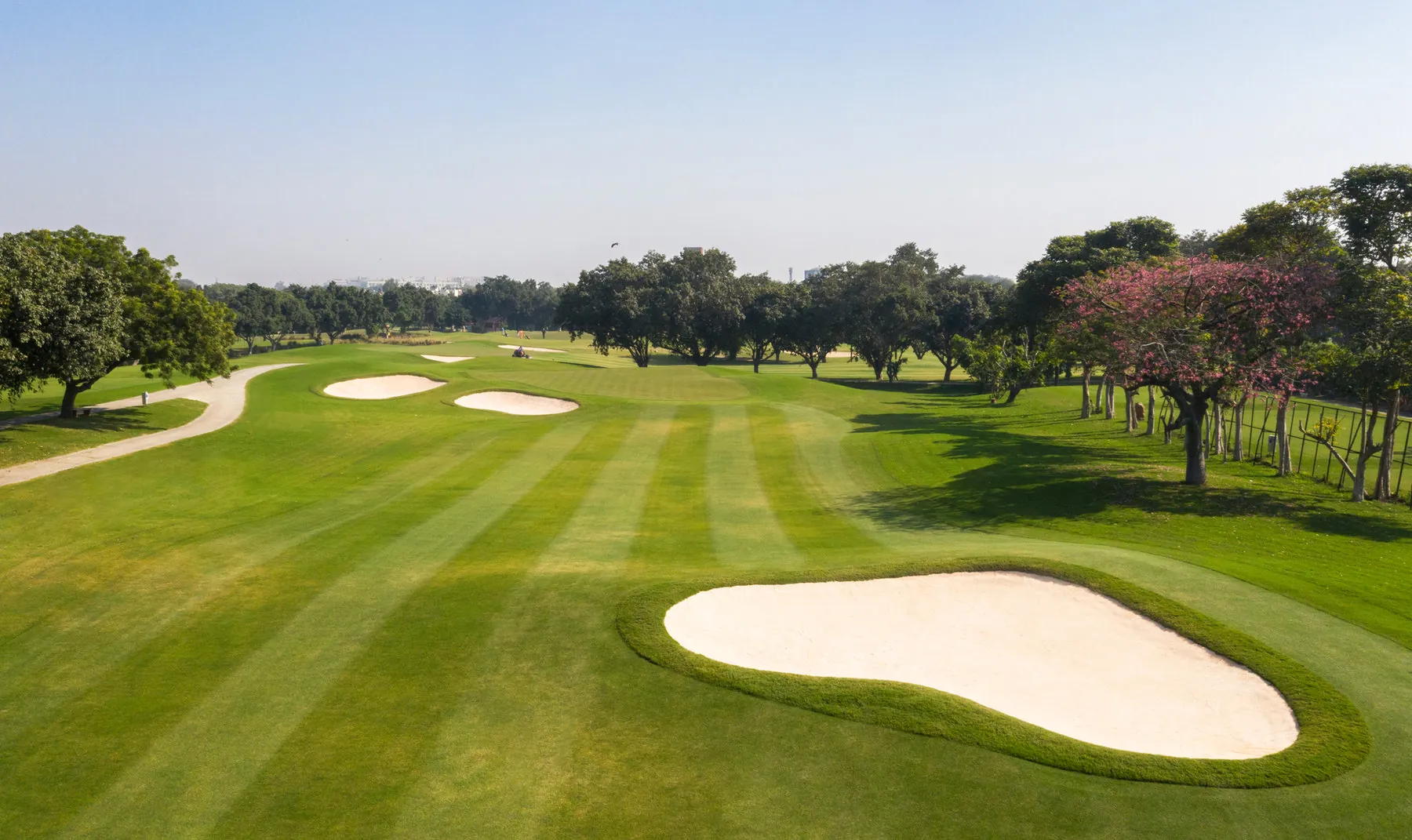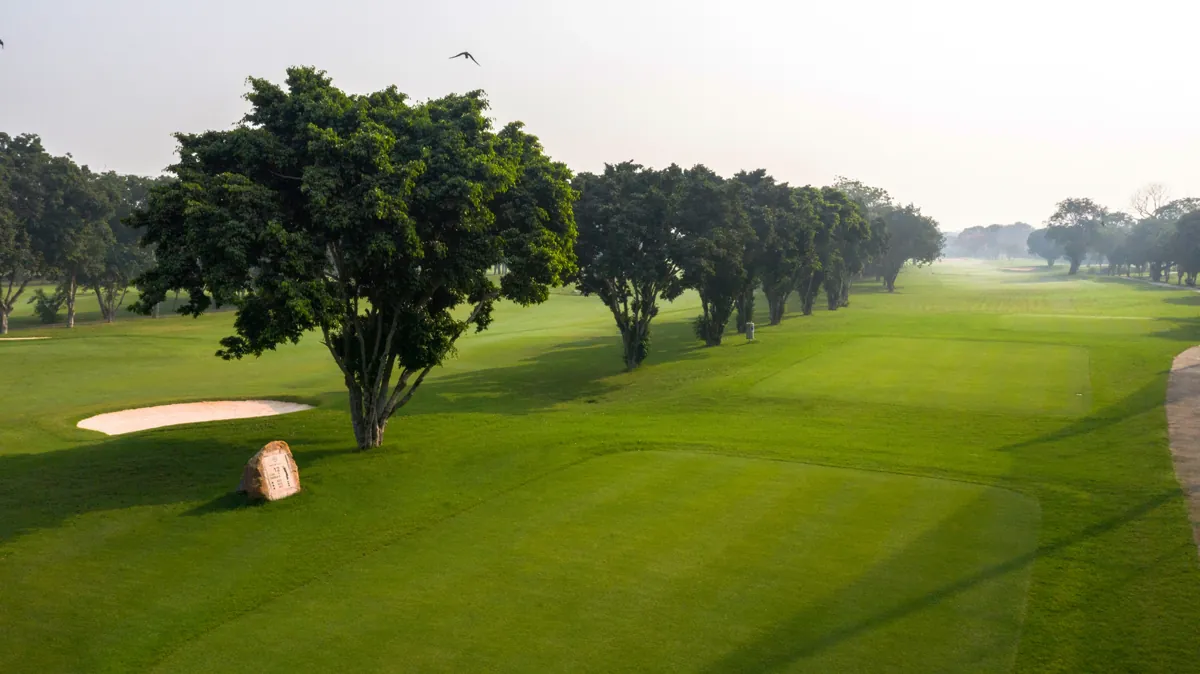
The first question most landowners and developers ask SGDC India is how many acres they need. The honest answer comes in two parts: a range for each type of course, and a list of things the land must have that no acreage figure tells you.
Acres by format
These are typical working ranges for courses built to international standards in India. Real projects move within them depending on the routing, the terrain and how much housing or hospitality sits alongside the golf.
| Format | Typical land | Notes |
|---|---|---|
| 18-hole championship course | 150 to 200+ acres | Room for long holes, practice facility, safety corridors and a clubhouse |
| 18-hole regulation course | 120 to 160 acres | The most common format for clubs and resorts |
| 9-hole regulation course | 50 to 80 acres | Can be planned so a second nine is added later |
| Executive course (par 3s and short par 4s) | 40 to 70 acres for 18 holes | Faster rounds, lower water and maintenance |
| 9-hole par-3 course | 10 to 25 acres | Ideal inside townships, hotels and campuses |
| Full-length driving range | 12 to 20 acres | Plus space for a short-game area and parking |
Add land for the clubhouse, parking, the maintenance compound, the pump station and water storage. On a township project, the golf and the plots should be planned together so that safety corridors are designed in, not discovered later.
What the land must have, besides size
Water. A course in India needs a reliable irrigation source through May and June. Treated sewage water, rainwater harvesting into lakes and borewells all work, but the quantity and quality must be tested before design. Water decides the grass, the irrigation design and the running cost.
Drainage. The monsoon decides whether the course is open in August. Low-lying or waterlogged land can be built on, but the earthworks and drainage budget grows. A topographic survey shows where water will collect.
Shape. Long, narrow plots and plots broken by roads, high-tension lines or nalas reduce the number of good holes that fit. A compact 120 acres can work better than a fragmented 180.
Soil. Rock, black cotton soil and saline soil all change construction methods and cost. Soil tests are cheap; surprises during shaping are not.
Access and approvals. Road access for construction traffic, land use conversion and environmental clearances take time. Start them early.
Too little land? Change the format, not the standard
If the plot is smaller than a regulation course needs, the answer is not to squeeze 18 full holes into it. An executive course, a 9-hole course or a par-3 course with a lit driving range can deliver more rounds, more members and more value per acre. Read our guide to 9-hole and executive golf courses.
How SGDC helps at the land stage
SGDC India walks the site, reviews survey, soil and water data and gives routing input before any design fee is spent. We then help you choose a golf course architect from India or abroad, and build the course under one contract. See golf course design in India and the feasibility study guide, or send us your site plan through the contact page.