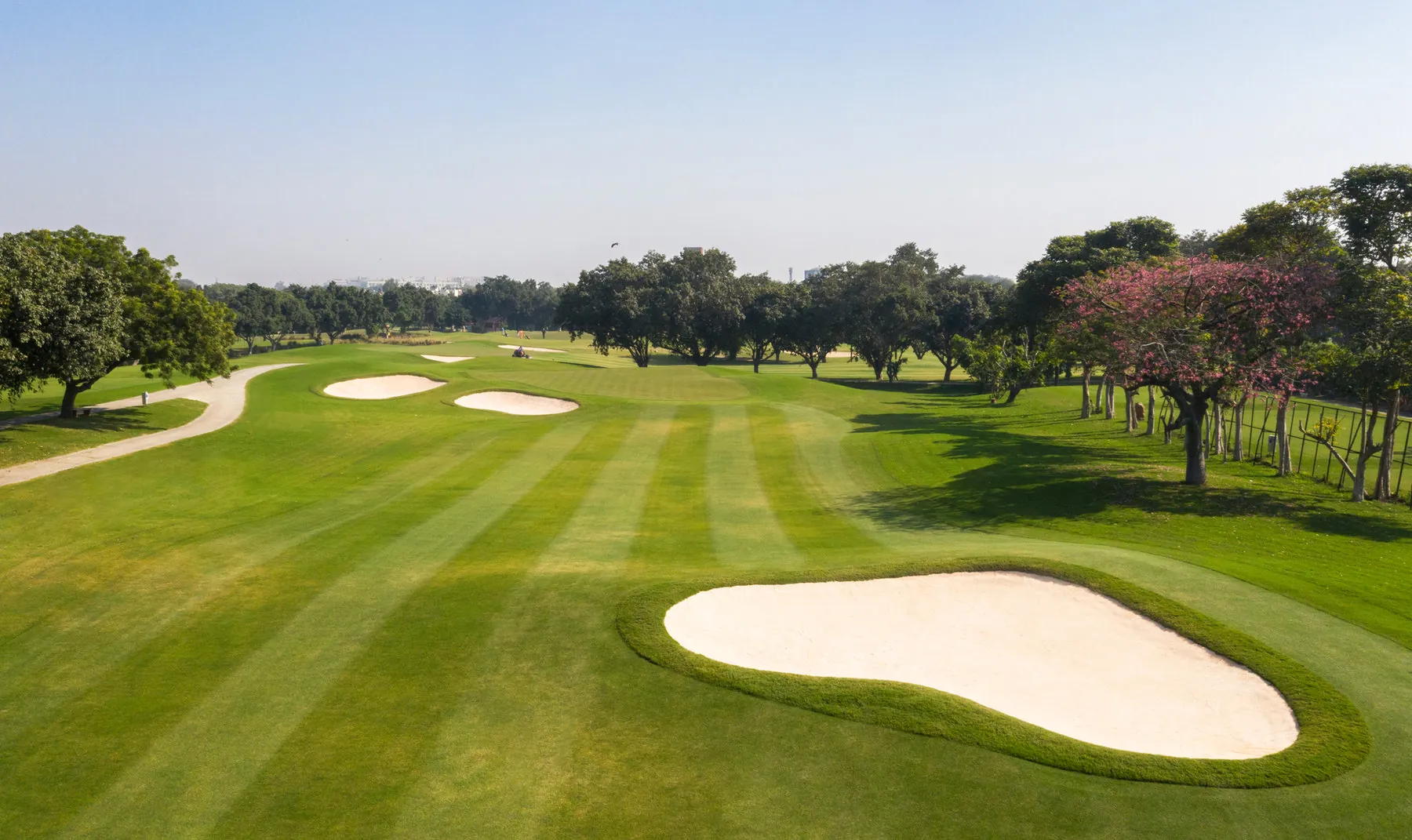
No part of a golf course is as invisible, or as decisive, as its irrigation. A well-designed system keeps a course green through a Delhi or Hyderabad summer on the least possible water. A poorly designed one costs money every month for twenty years. This is how SGDC India, the Rain Bird golf partner in India, approaches the design and cost of a system.
What a golf irrigation system consists of
- Water source and storage. Borewells, treated water, a lake or a reservoir sized to the daily peak demand of the course.
- Pump station. Variable-speed pumps that deliver the pressure the design needs at the far end of the course.
- Mainline and laterals. HDPE or PVC pipe sized so that pressure losses stay within the design limits.
- Rotors. Golf rotors on greens, tees, fairways and roughs, with part-circle heads around greens and bunkers so sand stays dry.
- Control. Rain Bird IC System integrated control at every rotor, and a CirrusPRO central control that runs programmes, responds to weather and lets the superintendent adjust any head from a phone.
- Sensors and weather. Weather station, flow sensors and soil moisture inputs that let the system water by need rather than by timer.
How the design is sized
The design starts with the agronomy: the grass, the climate, the peak evapotranspiration in the hottest month and the hours available to water each night. From that comes the daily demand in cubic metres, the number of rotors, the spacing, the pipe sizes and the pump capacity. Design for the peak week of the year; a system that keeps up in March and falls behind in May will show on the fairways every summer.
What drives the cost
- Coverage. Wall-to-wall irrigation of 18 holes needs far more rotors and pipe than greens, tees and fairways only.
- Control technology. Integrated control at the rotor costs more than decoder or satellite systems to install and far less to extend, troubleshoot and maintain.
- Pump station and water source. A new reservoir or long pipeline from a treated water source can be a large share of the total.
- Terrain and soil. Rock and distance raise trenching costs.
- Renovation versus new build. Replacing an old system on a live course costs more per hole than installing on a new build, because play has to continue.
Where not to cut corners
- Rotor spacing. Stretching spacing to save heads creates dry rings that staff then hand-water for years.
- Pump capacity. The pump station is the heart of the system; under-sizing it limits everything downstream.
- Central control. CirrusPRO pays for itself in water saved, in labour and in the ability to react to a failed head in minutes.
Water savings
A modern Rain Bird system with central control, part-circle heads and sensor-based scheduling commonly saves a substantial share of the water a conventional timer-based system uses, while delivering better turf. In a country where water allocations to golf courses are increasingly scrutinised, that saving is also the licence to operate.
Working with SGDC
SGDC designs, installs, commissions and supports Rain Bird golf irrigation in India, from new courses to phased renovations of existing systems. Send us your course plan and water source details and we come back with a design concept, a phased cost and the water budget the system will run on.