Search for golf cart prices in India and you will find everything from inexpensive imported buggies to premium fleet vehicles, with very little explanation of why one costs several times more than another. For a golf club, a resort or a residential township buying a fleet, the sticker price is the least useful number. Here is how to think about it instead.
What decides the price of a golf cart
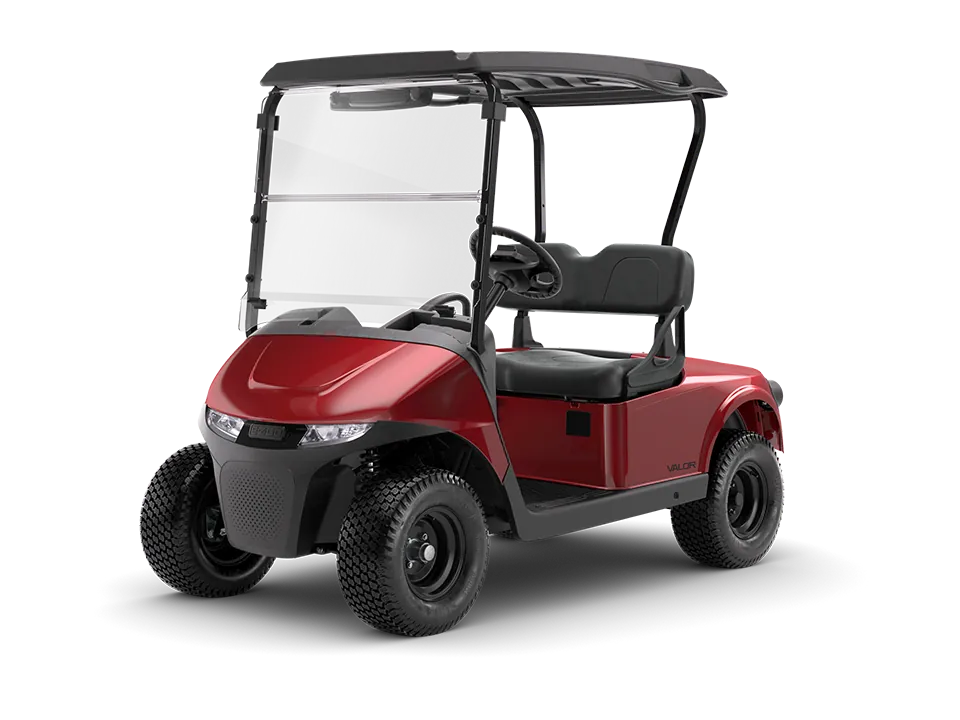
- Powertrain. Petrol carts are the lowest upfront cost. Lead-acid electric carts cost a little more and need battery watering and replacement every few years. Lithium carts, such as the E-Z-GO ELiTE range powered by Samsung SDI cells, cost the most upfront and the least to run: no watering, faster charging, lighter weight on the turf and a battery that lasts the life of the vehicle under normal fleet use.
- Seating and body. Two-seat fleet carts, four-seat carts and six or eight-seat shuttles are different vehicles with different prices. Lifted bodies, cargo beds and weather enclosures add to the cost.
- Fleet technology. GPS fleet management such as E-Z-GO PACE Technology adds a per-vehicle cost and gives the course geofencing, pace-of-play data, on-screen advertising and the ability to lock carts out of wet areas.
- Brand and build. A fleet cart from E-Z-GO is built for ten thousand rounds a year on a golf course, with a chassis, brakes and controllers to match. Light-duty buggies built for campuses and events are not the same product, whatever the photographs suggest.
- Duties and logistics. Imported vehicles carry customs duty and freight. Dealer-direct supply through an official distributor includes pre-delivery inspection, warranty and parts stock in India.
Why the five-year cost matters more
A fleet of forty carts is a decision for the next decade. Add up fuel or electricity, battery replacement, tyres, brakes, downtime and the staff hours spent on maintenance, and the cheapest cart on paper is rarely the cheapest cart to own. Lithium fleets in particular change the maths: no battery watering, no acid, no equalising charges and a vehicle that is lighter on the greens surrounds.
Buying versus leasing
Many Indian clubs now lease fleets or take financing from the distributor rather than buying outright. Leasing keeps the fleet young, puts maintenance on the supplier and turns a capital expense into an operating one. Ask what happens at the end of the term and who carries the battery risk.
The questions to ask any supplier
- Is the cart a golf fleet model, or a general-purpose buggy with a golf name?
- What is the battery chemistry, the warranty on the battery, and the expected number of charge cycles?
- Where is the parts stock held in India, and what is the turnaround on a controller or a motor?
- Is there dealer-direct service, and who trains our workshop team?
- Can the fleet be fitted with GPS fleet management now or later?
- What is the trade-in or buy-back position after five years?
Getting a quotation
SGDC India is the official E-Z-GO distributor in India, with fleets delivered to clubs from Kashmir to Bengaluru. Tell us your course, the number of rounds, the terrain and whether you want lithium or petrol, and we come back with a fleet proposal, a running-cost comparison and financing options rather than a single sticker price.